
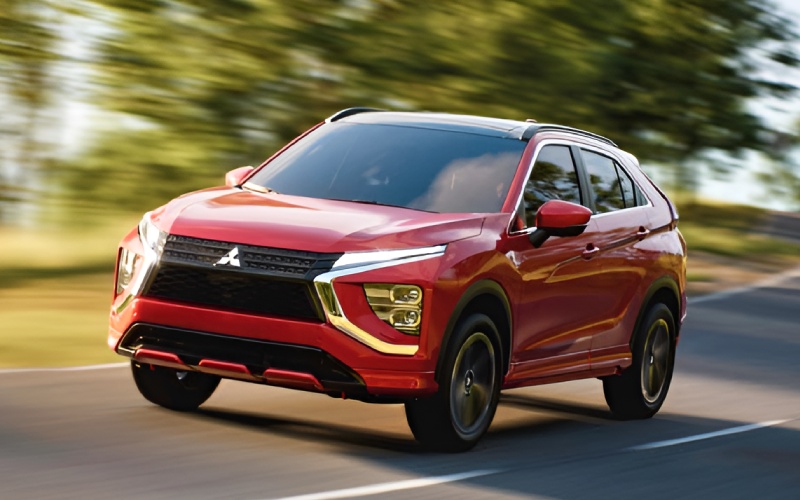
Prestige Mitsubishi - Which AWD system is better for winter around La Crosse, WI — 2026 Mitsubishi Eclipse Cross S-AWC or Chevrolet Trailblazer AWD?
Shoppers who plan for snow, slush, and spring thaw ask a straightforward question: which all-wheel system feels more secure—Mitsubishi’s Super-All Wheel Control on the 2026 Eclipse Cross or the available AWD on the 2026 Chevrolet Trailblazer? The answer begins with what each system sets out to do. S-AWC is standard on every Eclipse Cross trim, designed to coordinate traction, braking, and yaw control, then distribute power to help maximize grip across changing road surfaces. The Trailblazer’s available AWD brings helpful traction, and select trims add three drive modes to tune responses—even an ACTIV variant with off-road suspension tuning for mild trails. Both are beneficial in poor weather, but S-AWC’s integrated approach and always-on availability across the lineup give it an inherent advantage for winter predictability.
Winter handling also depends on how driver-assistance and chassis tuning reinforce the AWD system. The Eclipse Cross includes Forward Collision Mitigation (FCM) with Pedestrian Detection and Lane Departure Warning on every trim; upper trims add Blind Spot Warning with Lane Change Assist and Rear Cross Traffic Alert, plus an available Multi-View Camera System. Chevrolet equips the Trailblazer with the Chevy Safety Assist suite—Forward Collision Alert and Automatic Emergency Braking, Front Pedestrian Braking, Lane Keep Assist with Lane Departure Warning, Following Distance Indicator, and IntelliBeam®—and higher trims bring more features. Where the Mitsubishi distinguishes itself is the way S-AWC, Active Stability Control, and Hill Start Assist collaborate to keep the vehicle composed as surfaces change. That composure is what drivers notice most on slick on-ramps and plowed-but-icy neighborhood routes.
- Traction focus: S-AWC is standard across every Eclipse Cross trim; Trailblazer AWD is available on select builds.
- Driver confidence: Eclipse Cross pairs S-AWC with standard FCM and LDW, plus available BSW with LCA and RCTA; Trailblazer offers Chevy Safety Assist with key features like Front Pedestrian Braking and IntelliBeam®.
- Usability: Handsfree Power Tailgate, available heated steering wheel, and available leather-appointed seating surfaces favor easy daily use in cold weather; Trailblazer counters with a standard 11-inch screen and a flat-fold front passenger seat.
- Ownership assurance: Mitsubishi’s 10-year/100,000-mile Powertrain Limited Warranty and 2-Year/30,000-Mile Limited Maintenance add long-haul value many winter-focused buyers appreciate.
What about powertrains? The Eclipse Cross uses a turbocharged 1.5-liter paired with a smooth CVT tuned for traction-led acceleration in slippery conditions. The Trailblazer offers an ECOTEC® 1.3L Turbo with a nine-speed automatic in certain AWD configurations—peppy and efficient, with dual-outlet exhaust in ACTIV and RS. Each delivers real-world competence, yet their personalities differ. The Mitsubishi leans into poised, predictable responses; the Chevrolet adds selectable modes for a sportier feel. If winter confidence tops the list, the vehicle with standard S-AWC across trims holds the upper hand, particularly when those cold snaps arrive without much notice.
Drivers who want to view these systems side by side should plan a route with transitions—plowed main roads, side streets, and a slick parking lot. That is where you can feel how S-AWC settles the chassis and meters torque in real time. It is also where you experience driver aids like the Eclipse Cross’s available Multi-View Camera System versus the Trailblazer’s clear rear camera and lane guidance. The choice then becomes less about raw specs and more about feel—how much stability you sense in the wheel, how calmly the vehicle tracks straight, and how predictable launches are from a stop.
Prestige Mitsubishi invites you to compare all-weather features and winter practicality in a way that reflects your daily routes. Our team is serving Menomonie, La Crosse, and Wausau with test drives that highlight S-AWC’s benefits alongside cabin comfort must-haves like heated seats and steering wheel. When an SUV’s first job is to get you home safely, the system that works seamlessly in the background often makes the difference. In this case, standard S-AWC gives the Eclipse Cross a meaningful advantage for drivers who count on their vehicle through every unpredictable stretch of winter.
Frequently Asked Questions:
Does S-AWC require driver input to switch modes?
S-AWC is engineered to manage traction and stability continuously. Driver-selectable settings can tailor responses for low-traction conditions, but the system’s core benefit is always on—no separate option box to check and no additional hardware to add later.
How do the safety suites compare in poor weather?
Both vehicles include essential driver-assistance features. The Eclipse Cross brings standard FCM with Pedestrian Detection and LDW, plus available BSW with LCA and RCTA. The Trailblazer’s Chevy Safety Assist bundles AEB with Front Pedestrian Braking, Lane Keep Assist with Lane Departure Warning, Following Distance Indicator, and IntelliBeam®. The difference you feel most in winter comes from how these aids work alongside S-AWC’s traction management.